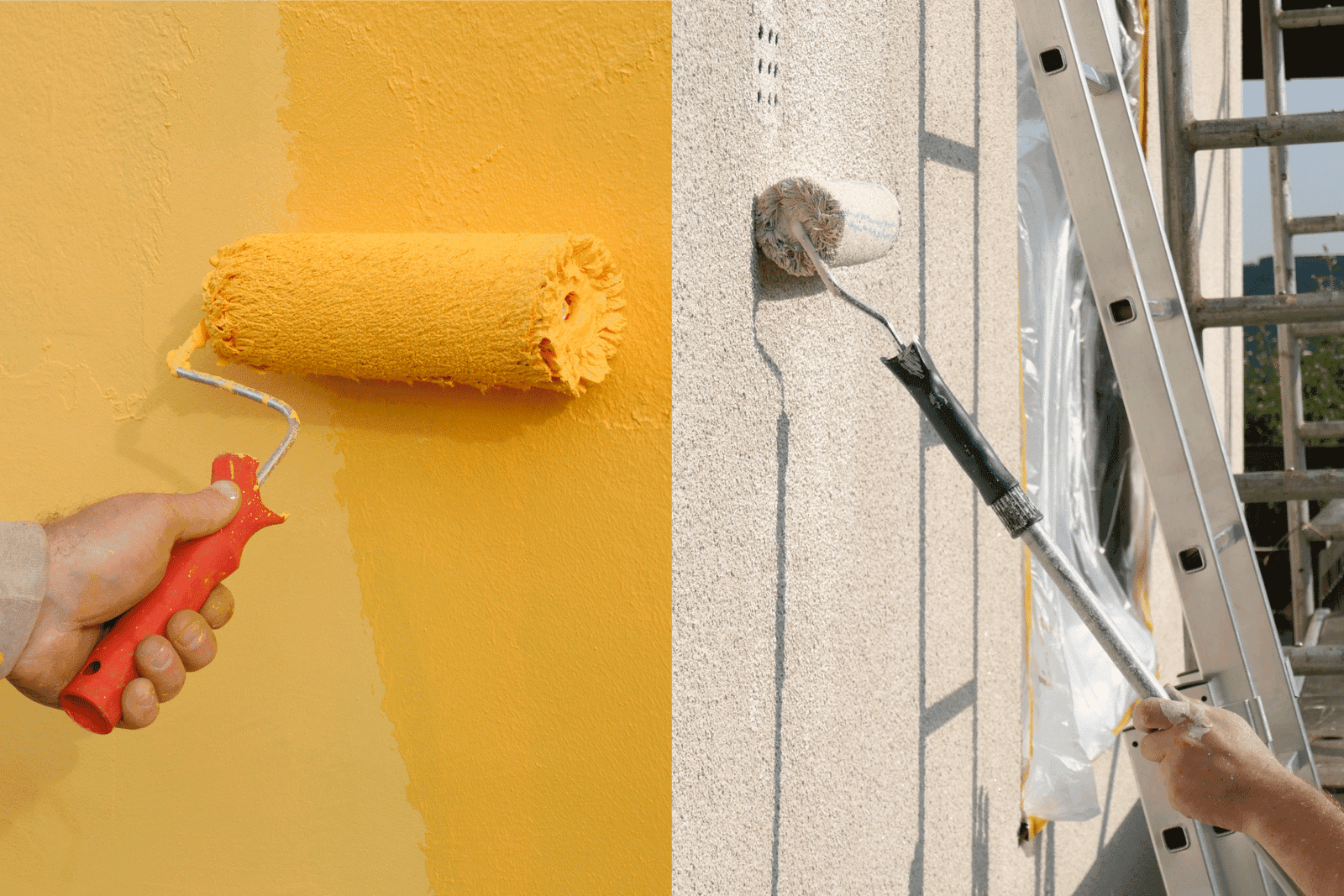
Choosing the right paint for your home involves more than picking a color from a chart. Interior vs exterior paint is an important distinction because the two types are designed to deal with very different conditions.
Think about your own home.
Your living-room walls are protected from rain and direct sun, but they still need to handle everyday marks, cleaning and regular household use.
Your exterior walls, on the other hand, are exposed to Virginia’s sun, rain, humidity and changing weather.
That means the paint, finish and preparation need to suit the surface and where it is being used.
Did you know? Donalson Painting’s Exterior Painting process in Virginia includes inspecting the surface, cleaning, stripping loose paint, sanding rough patches, fixing cracks and priming where necessary.
This treatment helps to provide an appropriate base for a final coating.
So what are the main differences between interior and exterior painting Virginia, and why should it matter when you repaint your house?
Let’s go over 7 key differences, from weather exposure and durability to moisture, surfaces and preparation, so you can make a more informed choice for your next painting project.
What Is the Difference Between Interior and Exterior Painting Virginia?
At a basic level, interior vs exterior paint comes down to the conditions each coating needs to handle.
Interior paint is for indoor surfaces like walls, ceilings, trim and other areas inside your home.
Exterior paint is formulated for outdoor surfaces that may be subject to sunlight, rain, humidity and temperature changes.
Here’s the thing: just because the color or finish is similar doesn’t mean the products can be used interchangeably.
Paints can emit volatile organic compounds (VOCs), especially when they are first used. It recommends low or zero VOC products, and good ventilation during and after indoor painting.
7 Key Interior and Exterior Painting in Virginia Differences
| Factor | Interior Paint | Exterior Paint |
|---|---|---|
| Main use | Indoor surfaces | Outdoor surfaces |
| Weather exposure | Limited | High |
| Sun exposure | Usually lower | Often direct |
| Moisture | Depends on the room | Regular outdoor exposure |
| Main concerns | Cleaning, marks and indoor air quality | Weather, UV and surface protection |
| Common surfaces | Walls, ceilings, trims | Render, brick, timber, fences and facades |
| Preparation | Patching, sanding and priming | Cleaning, repairs, sanding and priming |
1. Weather Exposure
Interior walls are protected from direct rain and most outdoor weather. Exterior surfaces do not have that protection.
Virginia homes can face strong sunlight, rain, humidity and changing weather.
This means exterior products need to be selected for the surface and conditions where they will be applied.
2. Durability
Interior paint needs to cope with everyday marks, cleaning and normal household use.
A hallway, kitchen or family room may need a finish that can handle frequent contact.
Exterior paint has a different job. It needs to protect surfaces while remaining suitable for outdoor exposure.
That is why choosing paint based only on color can lead to the wrong result.
3. UV and Color Exposure
Sunlight can have a major effect on exterior surfaces over time. Outdoor paint therefore needs to be selected with exposure and the underlying surface in mind.
For example, a sun-facing wall or garage door can have very different requirements from a bedroom wall.
Donalson Painting, LLC, notes that its exterior work uses weather-resistant products suited to outdoor surfaces and Virginia conditions.
4. Moisture and Mold
Moisture can affect both indoor and outdoor paint, but the source is often different.
Inside your home, bathrooms, kitchens and laundries may have higher moisture levels. Outside, walls and other surfaces can face rain and damp conditions.
If you have mold, water stains or damaged render, painting over the problem is not enough. The surface should be assessed and prepared first.
Donalson Painting’s interior service includes bathroom mold treatment, while its painting work also covers render repair and other surface preparation.
You should also read: Why Power Washing Matters Before Exterior Painting in Virginia
5. VOCs and Indoor Air Quality
This is one difference you should not ignore.
VOCs can come from paints and other household products. It is recommended choosing paints with low or zero VOC levels and ventilating the home during and after indoor painting.
For an indoor repaint, ask about the product’s VOC information rather than choosing a paint based only on its color or price.
6. Surfaces and Finishes
Interior painting may involve plaster, ceilings, doors, trims and cabinets. Exterior work can involve render, brick, timber, weatherboards, fences, decks, gutters and garage doors.
Each surface may need different preparation and paint products.
7. Preparation and Application
Good preparation can make a major difference to the finished result.
For an interior repaint, this may mean:
- Inspecting the walls.
- Repairing cracks and dents.
- Sanding uneven areas.
- Priming where needed.
- Protecting floors and furniture.
- Applying the chosen coating.
Exterior preparation may include cleaning, removing loose paint, repairing cracks, sanding and priming before the finish coats are applied.
Donalson Painting, LLC states that its process includes preparation before final application rather than simply painting over existing defects.
Can I Use Exterior Paint for Interior?
If you are asking, Can I use exterior paint for interior, do not assume the answer is yes.
Refer to the manufacturer’s label and technical information for the exact product. Indoor uses have other considerations like ventilation and VOC exposure.
The best option is to use a product that is specifically approved for the surface and location where you want to apply it.
A Practical Virginia Home Example
Imagine you are repainting a weatherboard house. Your living room needs a durable interior finish that suits daily household use. The weatherboards outside face sun and rain.
Using one product simply because you like its color misses the main issue.
The two surfaces experience different conditions, so the paint system and preparation should suit each location.
Which Paint Should You Choose?
Start with three questions:
- Where will the paint be used?
- What surface are you painting?
- What conditions will that surface face?
If the surface has peeling paint, cracks, mold, stains or other damage, deal with those issues before the final coating is applied.
For homeowners planning interior and exterior painting Virginia projects, professional advice can also help you choose suitable products and prepare the surface correctly.
The Right Paint Starts With the Right Surface
The biggest lesson from interior vs exterior paint is simple: choose paint for the job, not just the color.
Your walls, timber, render, brickwork and other surfaces each have their own needs.
Take time to check the product specifications, prepare the surface and consider the conditions it will face.
If you would rather have the surface assessed before you start, Donalson Painting, LLC provides interior and exterior painting Virginia, with more than 10 years of experience and a preparation-led process.
You should also read: Questions to Ask Before Hiring Painting Services in Virginia
Planning Your Next Repaint Project?
Contact Donalson Painting, LLC for a free consultation and quote, and discuss the right approach for your home’s interior or exterior surfaces.



0 Comments